Literature
This section is a guide to the scholarship on the economy of apartheid South Africa: what was argued, on what evidence, and where the debates stand. It covers the economics and economic history of apartheid in depth, from its colonial and segregation-era origins to the transition, and the wider political, social and post-1994 literature more lightly.
It has four parts:
- Debates. 32 debates, each with its question, the positions taken, the evidence each side argued from, readings of shared sources that conflict, sources that remain underused, and the best-evidenced works.
- Works. 808 works (326 of them on the economics and economic history of apartheid), each with bibliographic details and a reading note: argument, evidence, method, place in the debates and principal findings, and for the core literature an evidence ledger of the sources used, the inference drawn and the strength of the main claims.
- Primary sources. 897 primary sources (censuses, commissions, statistical series, archives, newspapers, surveys), each listing the works that use it and the debates it informs, with links to the datasets on this site where the project holds the source.
- Evidence and holdings. The kinds of evidence the literature uses, set beside what the project archive holds, with the most-cited sources the archive lacks.
Conventions
The reading notes, evidence ledgers and debate summaries were written by an AI model (Claude) from the text of each work held by the project. A script then searched each work's text for every finding, claim and quotation, and only those it located are shown here. The notes have not been read against the works by a person, so treat them as a finding aid and check the work before citing it. Pages carry notes and bibliographic metadata only; the works themselves are not reproduced, and quoted excerpts are limited to short passages (at most 300 characters) that match the text exactly. Page numbers refer to the copy read and may differ from other editions. Claim strength grades each key claim by what it rests on: systematic data, partial data, illustration or anecdote, or assertion.
Records of the Employment Bureau of Africa (TEBA) and its predecessors are described where the literature uses them, but no data or tables derived from them are published here; see Licensing & Access.
The literature in figures
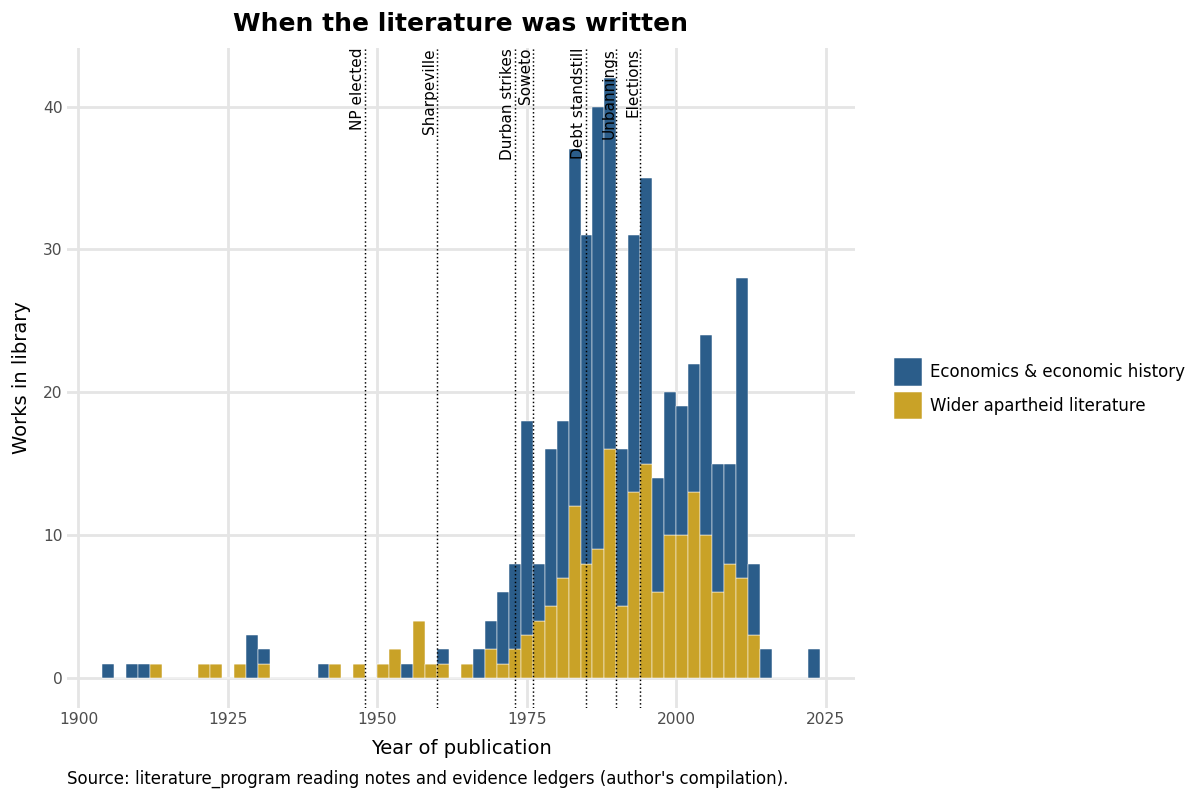
When the literature was written: works by year of publication.
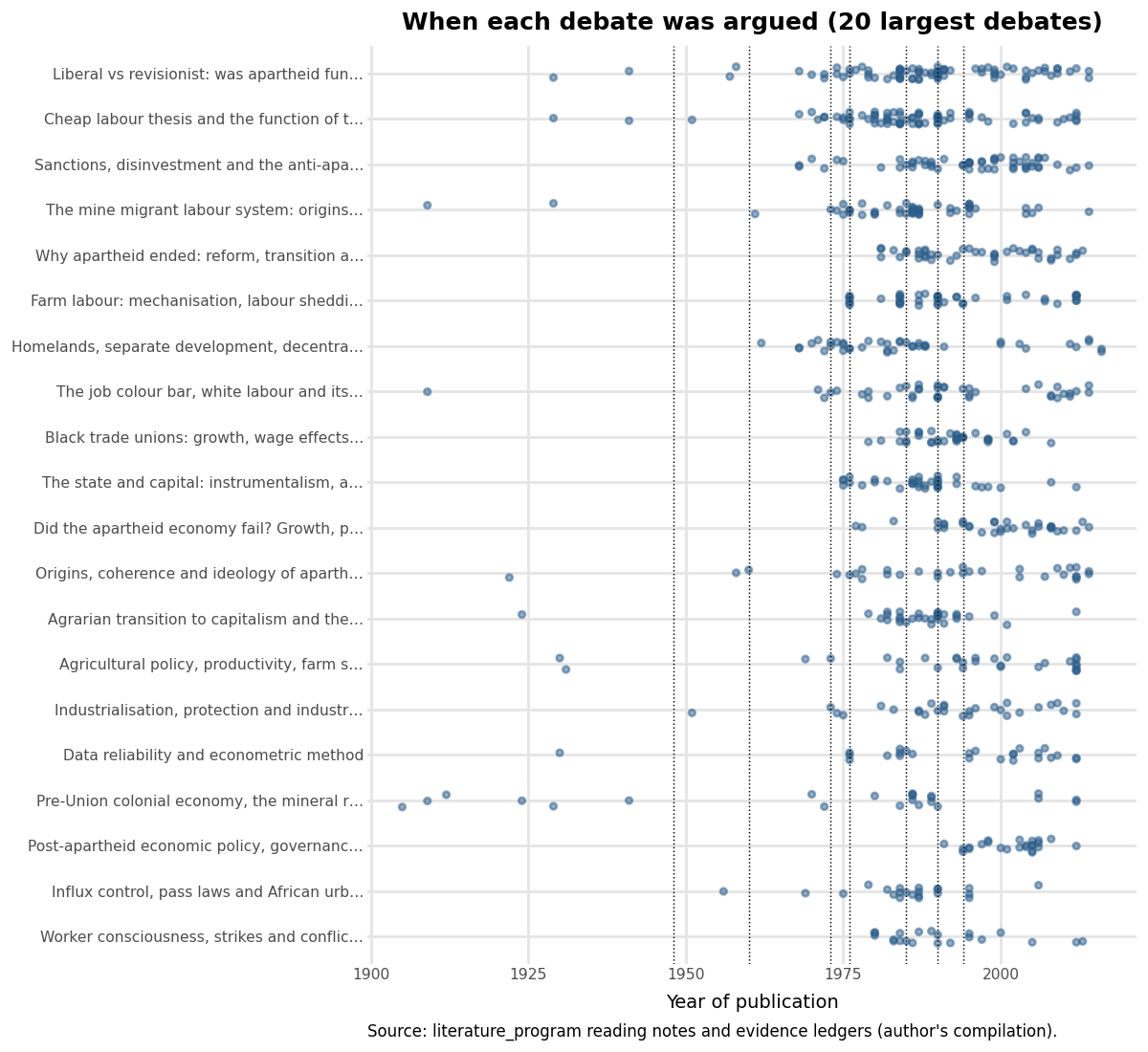
When each debate was argued: publication years of the works in the 20 largest debates.
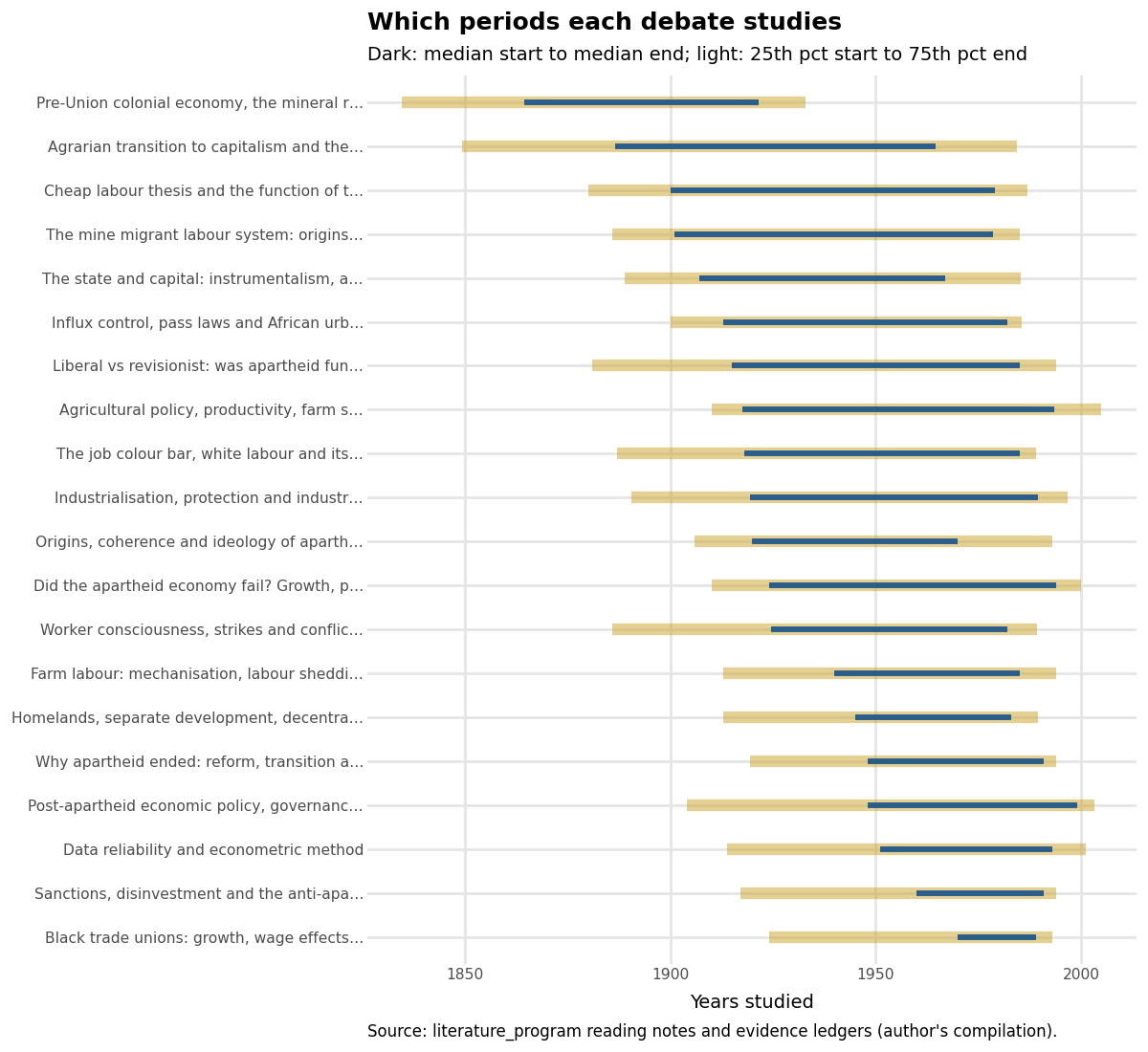
Which periods each debate studies. Dark bars run from the median start year to the median end year; light bars from the 25th-percentile start to the 75th-percentile end.
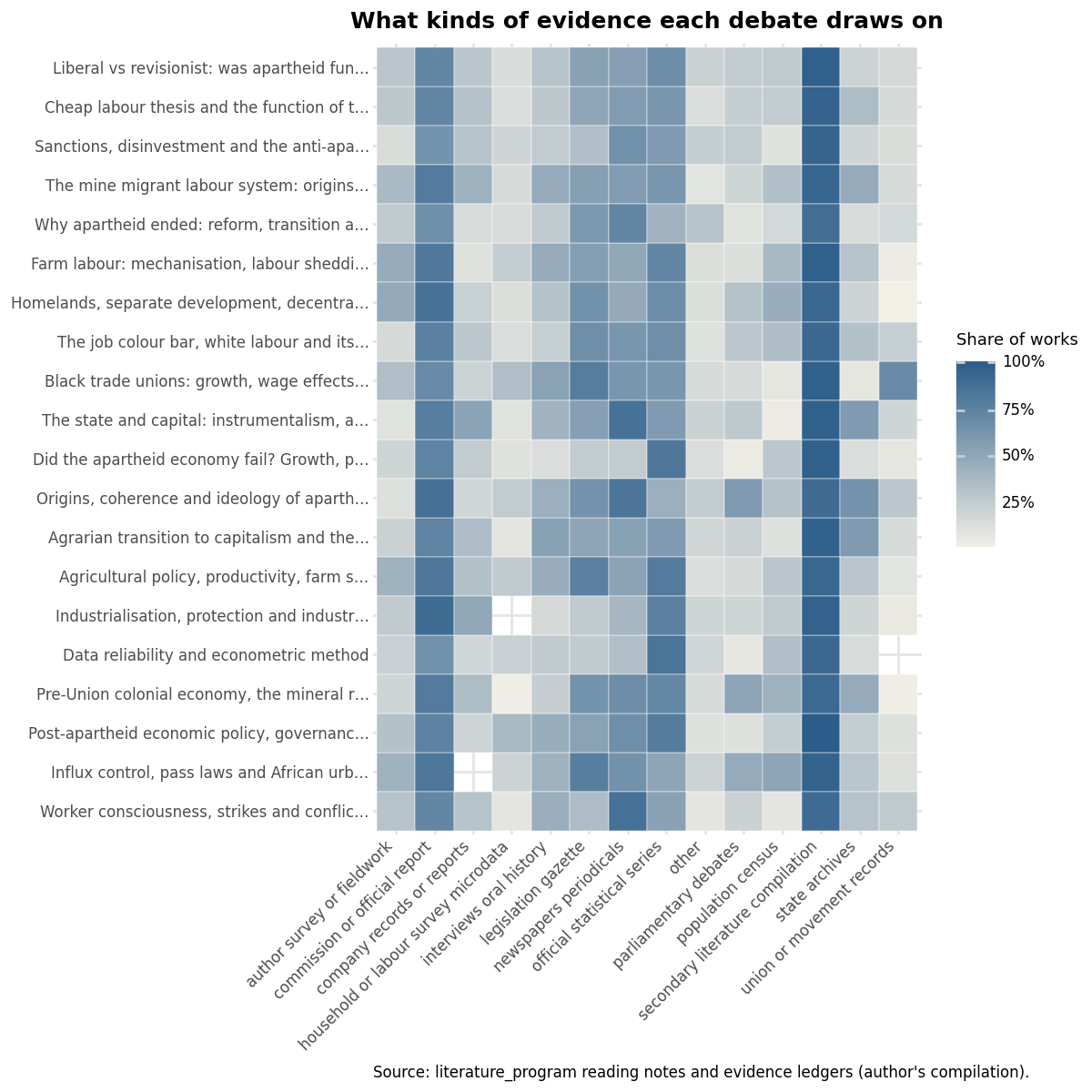
What kinds of evidence each debate draws on: share of works using each source type.
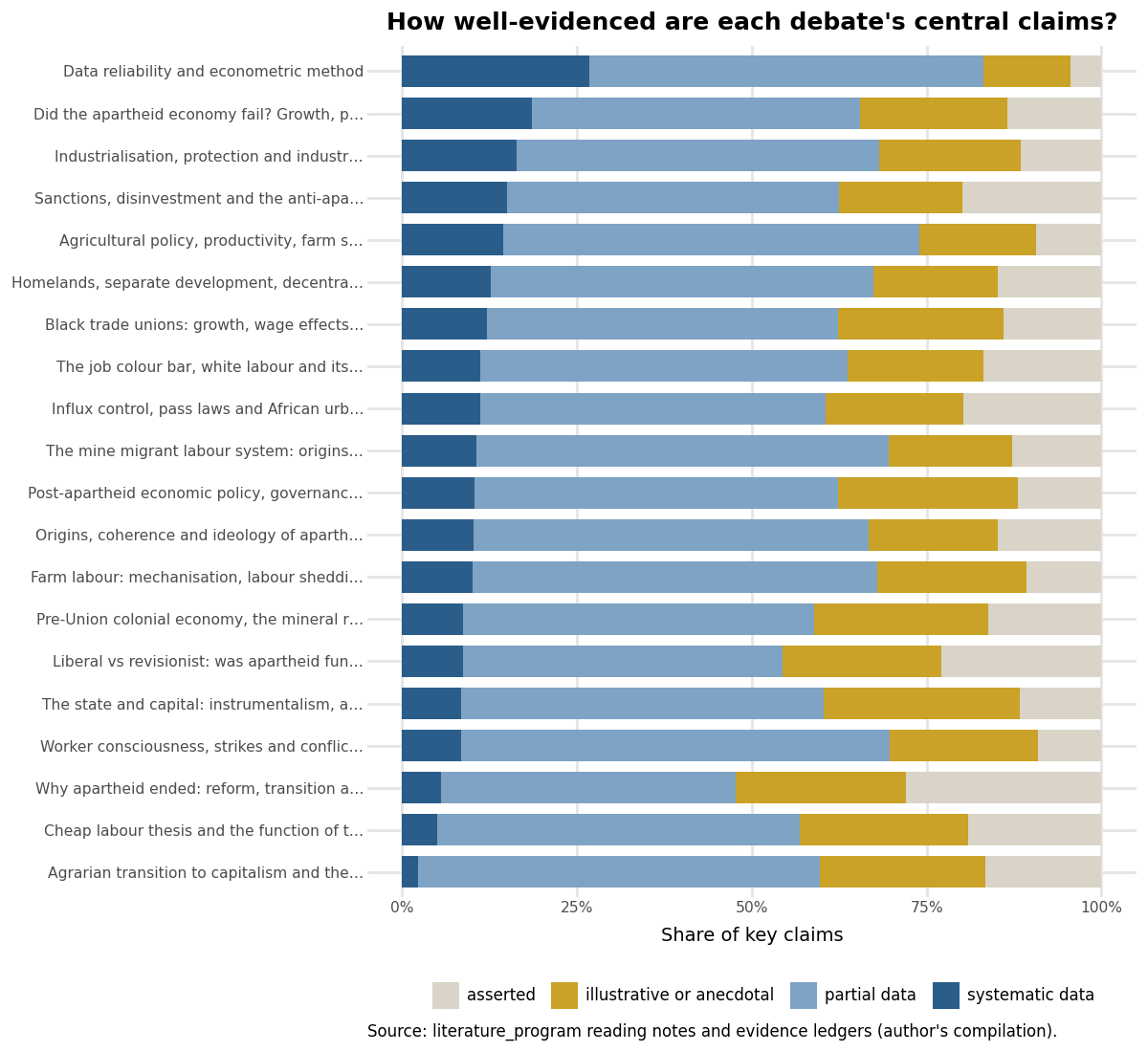
How well-evidenced each debate's central claims are: share of key claims resting on systematic data, partial data, illustration or assertion.
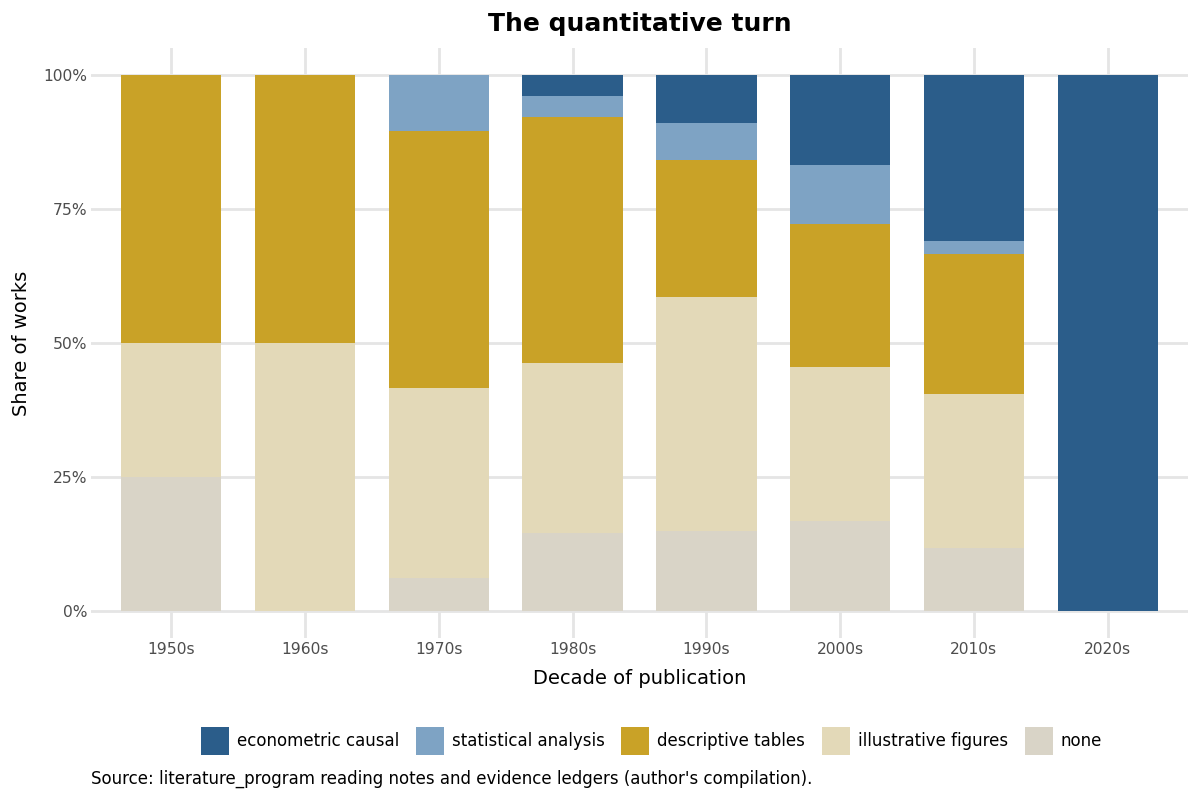
The quantitative turn: share of works by type of quantification and decade of publication.
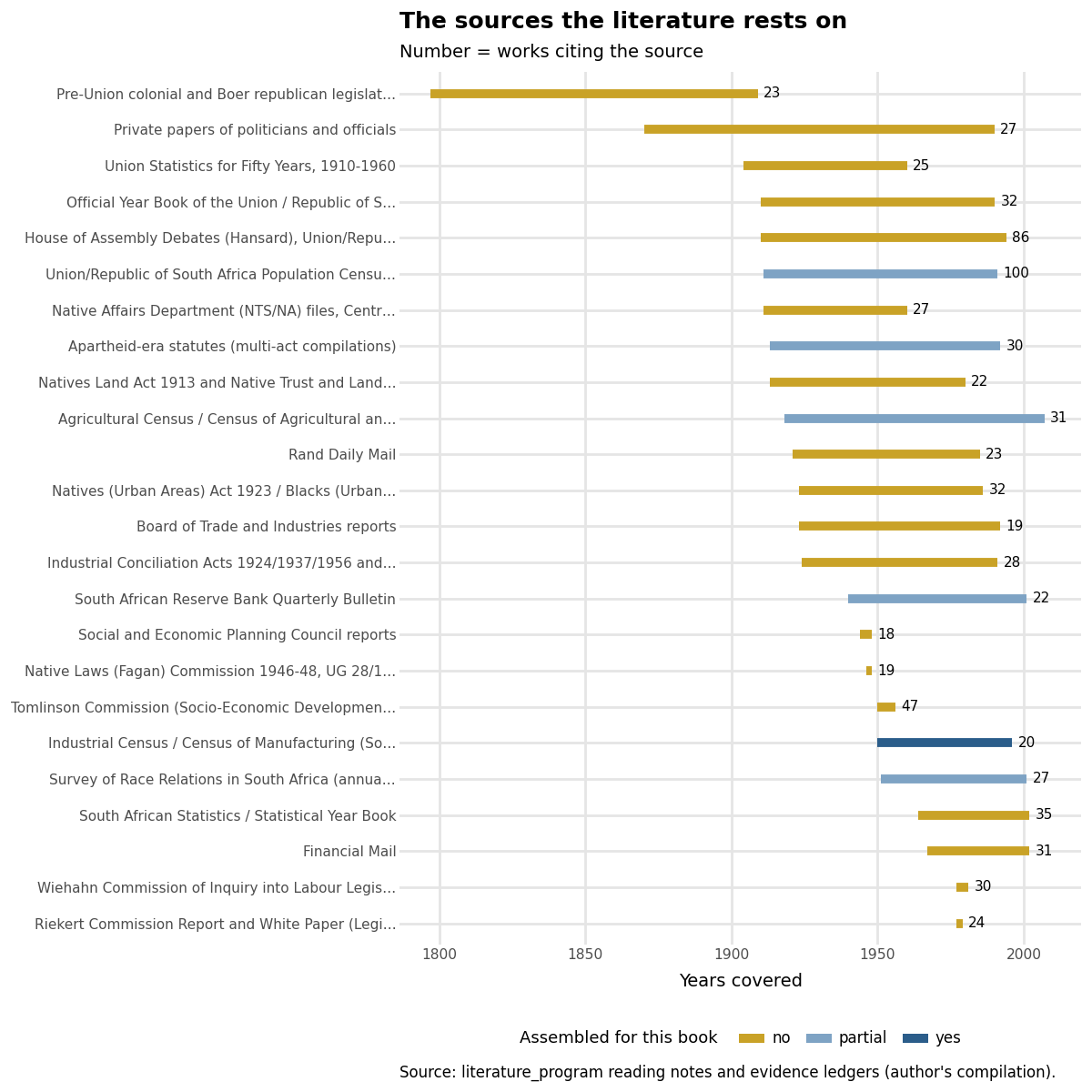
The primary sources the literature rests on; the number is the count of works citing each source.